A new Gartner survey published this week has confirmed what a lot of marketing folk have been quietly suspecting: AI automation in marketing is not a distant future. It is happening now, and it is about to get a lot bigger. According to the research, marketing leaders expect AI to handle 36% of all marketing work by 2028. Right now, that figure sits at 16%. In two years, it will more than double.
For small and medium-sized businesses in the UK, that is not a statistic to scroll past. It is a signal that the gap between businesses who are building AI into their marketing workflows and those who are not is widening, fast.
What Does “AI Marketing Automation” Actually Mean?
When most people hear “AI marketing automation,” they picture some sci-fi scenario where a robot writes all your content, runs all your ads, and replies to every customer enquiry without a human in sight. That is not quite where we are, and frankly, that is not the goal.
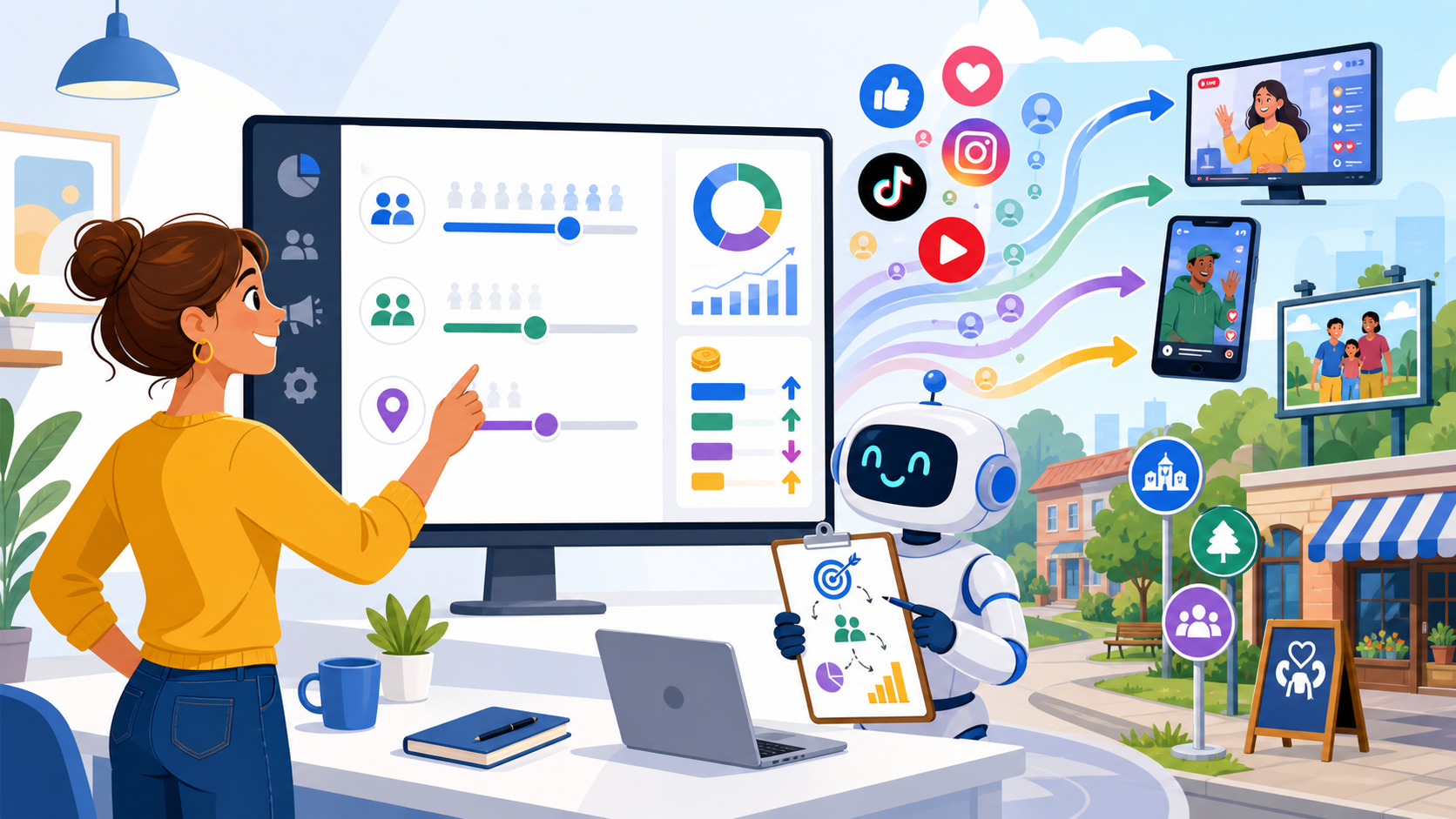
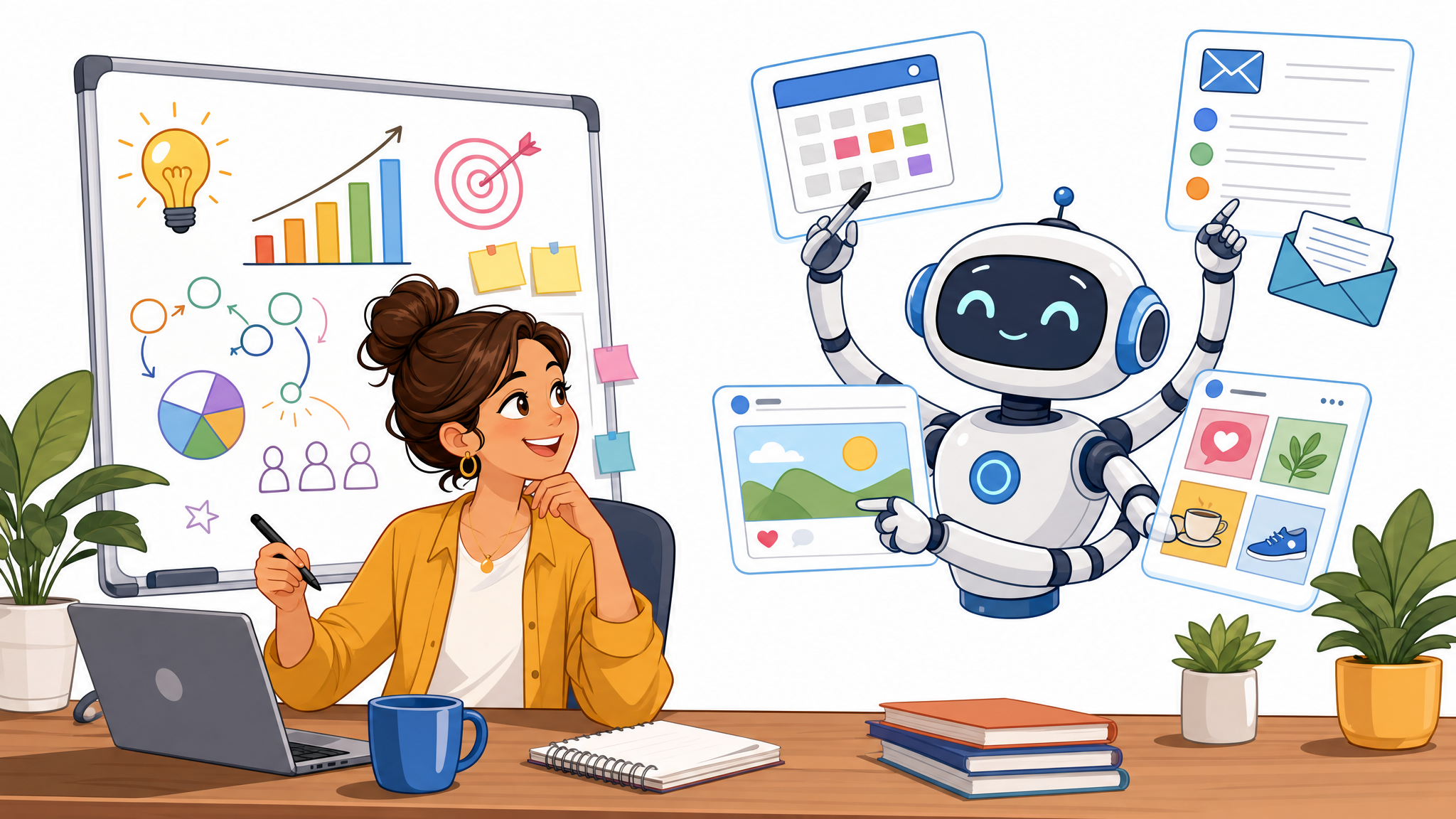
What the Gartner data is pointing to is more nuanced. AI automation in marketing covers a wide range of tasks: drafting email sequences, generating ad copy variations, segmenting audiences, scheduling social posts, personalising landing pages, and analysing campaign performance. None of these things require AI to replace your entire marketing function. They just require you to stop doing repetitive, time-consuming tasks manually when a machine can do them better and faster.
For small businesses, this is genuinely good news. Large enterprises have had access to expensive automation tools for years. AI is levelling the playing field.
The 16% to 36% Jump: Why It Matters Right Now
Doubling the share of marketing work handled by AI in two years is not a small shift. It is a structural change in how marketing gets done. And the businesses that figure this out early will have a significant advantage over those still doing everything by hand in 2028.
Think about it from a practical standpoint. If your competitors are automating 36% of their marketing work, they are freeing up significant time and budget to focus on strategy, creative, and customer relationships. If you are still manually writing every email, building every audience segment, and reviewing every ad report line by line, you will be slower, more expensive to run, and less able to compete.
This is not scaremongering. It is just arithmetic.
Where Small Businesses Should Start
The mistake most small businesses make when they hear about AI marketing automation is trying to do everything at once. They sign up for five tools, get overwhelmed, and go back to doing it all manually while telling themselves “AI just isn’t for us yet.”
Start with one workflow. Pick the thing that eats the most of your time and has a clear, repeatable structure. Email marketing is usually a good shout. If you are sending welcome sequences, follow-up emails, or nurture campaigns manually, that is time you could be getting back. A well-set-up CRM with AI-assisted automation can handle all of that while you focus on the bits that actually need a human brain.
Social media scheduling is another obvious win. Writing captions, choosing posting times, maintaining consistency across platforms. These are tasks that AI tools handle well, and getting them off your plate frees up hours every week.
Ad copy testing is a third area worth looking at. If you are running Google or Meta ads and only testing one or two variants, you are leaving performance on the table. AI can generate and test far more variations than any human team, and it can do it at a speed that makes a real difference to your cost per click.
The Bit That AI Cannot Do For You
Here is where we need to be straight with you, because a lot of the AI marketing conversation glosses over this part.
AI is very good at doing things at scale. It is not good at knowing what things are worth doing. That part is still on you.
If your brand voice is vague, your offer is unclear, or your customer understanding is shallow, AI will automate mediocrity at speed. You will send more emails, post more content, and run more ads, all of which underperform, just faster and with less effort.
The businesses getting the best results from AI marketing automation are the ones who have done the hard strategic work first. They know their audience. They have a clear message. They understand what makes a customer buy. AI then takes that clarity and scales it.
Strategy first. Automation second. Always.
What the Next Two Years Look Like
The Gartner projection is not a guarantee, but it is a useful frame for thinking about where to invest your time and budget. If AI is going to handle more than a third of marketing work by 2028, then the most valuable skill in marketing over the next two years is not knowing how to use AI tools. It is knowing how to direct them.
That means getting sharp on what your marketing is actually trying to achieve. It means building systems that can be automated without losing quality. It means understanding your data well enough to know when AI is doing a good job and when it is quietly drifting off course.
It also means not waiting. The businesses that start building AI into their marketing workflows now will have two years of learning, iteration, and improvement on those who wait until 2028 to get started.
Getting Ready Without Getting Lost
The practical question is always: where do I start without getting overwhelmed?
Audit your current marketing tasks. Write down everything you do in a typical week, from writing content to pulling reports to sending follow-up messages. Identify the tasks that are repetitive, rule-based, and time-consuming. Those are your automation candidates.
Then look at what tools you already have. Most CRMs and email platforms have AI features that are sitting unused. Before buying anything new, find out what your existing stack can actually do.
Set a clear goal for your first automation. Not “use AI more” but something specific, like “reduce the time I spend on email follow-ups by half.” Measurable goals make it much easier to know if something is working.
And if you are not sure where to start, or if you have tried before and it has not quite come together, that is exactly the kind of thing we help with at Precise Impact. We work with small and medium-sized businesses to build marketing systems that actually work, AI included. No fluff, no overcomplication, just clear thinking and practical implementation.
The 36% figure is coming whether you are ready for it or not. Better to be the business that shapes it than the one that gets shaped by it.