
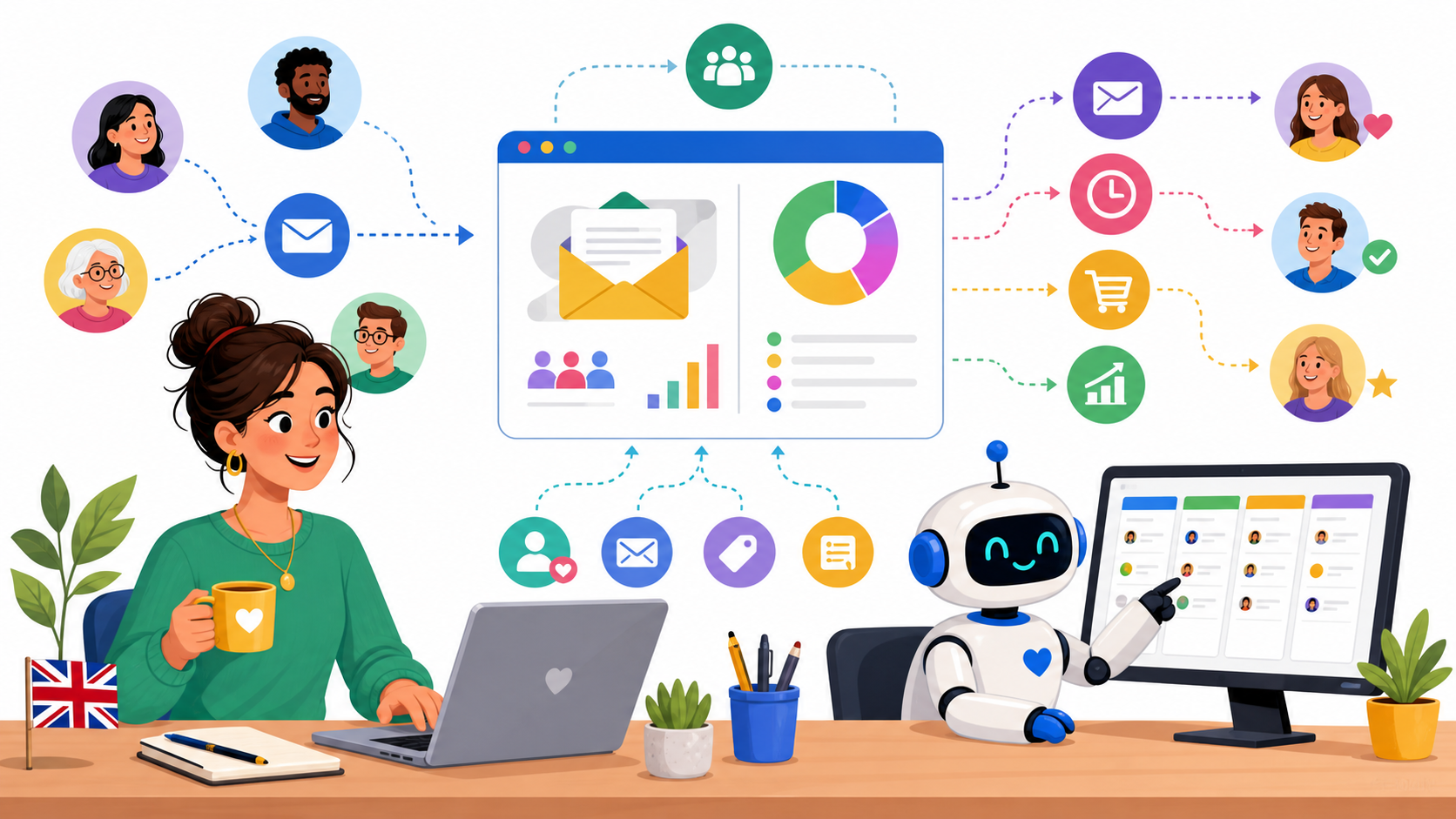
Email marketing automation for small businesses is having a very smug little moment. While everyone is busy arguing about AI search, social algorithms, and whether their latest reel has been personally offended by the Instagram gods, email is quietly sitting in the corner doing something useful: reaching people who already asked to hear from you.
That matters more in 2026 than it did last year. AI search is changing how people discover businesses. Social platforms are still brilliant, but they are rented space with rules that change while you are making a cup of tea. Paid ads are getting smarter, pricier, and more automated. Lovely, but also a bit feral if you are not tracking what happens after the click.
Your email list is different. You own the relationship. You can nurture it, segment it, automate it, measure it, and turn it into actual sales without begging an algorithm to be in a good mood.
Email Is Not Old. Your Lazy Newsletter Is Old
Let us be blunt. Email marketing is not dead. Bad email marketing is dead. The monthly newsletter that says “we have been busy” and then links to three random updates deserves a quiet retirement.
Good email now feels timely, useful, and personal. Not creepy personal. Nobody needs a subject line that sounds like it has been watching them through the curtains. But relevant personal. The kind where a new enquiry gets one follow-up, a previous customer gets another, and someone who clicked on a pricing page does not receive the same generic fluff as a person who downloaded a beginner guide.
That is where email marketing automation for small businesses earns its keep. It lets you stop treating every contact like a mystery blob in a spreadsheet and start responding to what people actually do.
AI Search Makes Owned Audiences More Valuable
Search behaviour is changing. More people are getting answers directly from AI-powered results, voice queries, summaries, and recommendation tools. Some will still click through. Some will not. That means your website, SEO, ads, and content still matter, but the journey is messier than it used to be.
So when someone does land on your site, fills in a form, downloads a checklist, books a call, joins your list, or asks a question, that moment is precious. It is not just “a lead”. It is a tiny hand raise in a very noisy room.
If your only follow-up is “we will get back to you soon” and then a human remembers three days later, congratulations, you have built a customer journey out of hope and biscuits.
A better system captures the enquiry, tags the interest, sends a useful first response, reminds the right person to follow up, and keeps the relationship warm. That is not fancy enterprise marketing. That is basic manners with a CRM.
The CRM Is The Bit Everyone Forgets
Lots of small businesses start with the email tool. That is fine, but it can turn into a tangle quickly. One platform sends newsletters. Another stores leads. A third handles forms. Someone has a spreadsheet called FINAL-final-leads-v3. Nobody knows who last spoke to Sandra from accounts. Marvellous.
Email marketing automation works best when it is connected to your CRM, because the CRM holds the context. It knows who is a new lead, who is an existing customer, who has gone cold, who asked about pricing, who attended an event, who needs a call, and who should absolutely not receive your beginner sequence because they have already spent money with you.
This is why we talk about Automagical so much. It is not because we woke up one day and decided small businesses needed another dashboard to ignore. It is because an all-in-one marketing and CRM platform makes the boring bits join up.
Forms feed the CRM. Contacts are tagged properly. Email sequences trigger from real behaviour. Follow-up tasks appear before opportunities go cold. Pipelines show what is actually happening. Suddenly your marketing is not a drawer full of loose cables.
What To Automate First
Please do not try to automate your entire business in one heroic weekend. That way lies panic, broken forms, and a Monday morning where everyone is afraid to touch the CRM.
Start with the moments where speed and consistency matter most.
- New enquiry response: Send a fast, helpful reply that confirms what happens next and points people to useful information.
- Lead nurture: Share proof, FAQs, case studies, advice, and gentle prompts for people who are interested but not ready yet.
- Quote follow-up: Stop letting sent quotes drift into the void. Follow up politely, then remind your team when a human nudge is needed.
- Customer onboarding: Set expectations, explain next steps, and reduce repetitive questions without sounding robotic.
- Review requests: Ask happy customers at the right time, while the good feeling is still warm.
- Reactivation: Bring quiet contacts back with a genuinely useful offer or update, not a desperate “just checking in”.
None of this needs to feel cold. The trick is to automate the timing and routing, not the personality. Your emails should still sound like you. Just the version of you that remembers everything and never loses a lead under a keyboard.
AI Can Help, But It Needs Adult Supervision
AI can make email marketing automation much smarter. It can help draft subject lines, summarise lead notes, suggest segments, score enquiries, and personalise content based on behaviour. Useful? Absolutely. Magic? Only if you enjoy disappointing yourself.
The danger is letting AI create more noise at higher speed. If your offer is unclear, your data is messy, and your follow-up process is held together by vibes, AI will not fix it. It will simply help you send confusing emails more efficiently. A triumph of technology, if your goal is unsubscribe chaos.
Before you add clever AI layers, get the basics right. Clean your lists. Define your pipeline stages. Decide what counts as a warm lead. Write proper email templates. Track opens, clicks, replies, bookings, and sales. Then use AI to improve a system that already has a spine.
Measure Sales, Not Just Clicks
Open rates are useful, but they are not the whole story. Clicks are useful, but they do not pay the bills on their own. The point of email marketing automation for small businesses is not to create a very pretty report. It is to move people from curious to confident to customer.
That means your reporting should connect email activity to real outcomes. Did the welcome sequence lead to bookings? Did quote follow-ups increase conversions? Did your reactivation campaign bring back past customers? Which emails helped move leads through the pipeline? Which ones were just decorative nonsense with a button?
When your email, CRM, forms, tasks, and sales pipeline live together, those answers are easier to find. You can see what is working, what is leaking, and what needs a polite shove into the bin.
Your Best Marketing Channel Is The One You Actually Follow Up
Here is the simple version. Keep using SEO. Keep testing ads. Keep showing up on social. Keep watching AI search and platform updates. All of that matters.
But do not build your entire growth plan on channels you do not control. Build an owned audience. Connect it to your CRM. Automate the useful bits. Write emails that sound human. Track what turns into revenue.
If you are a small business owner who is tired of chasing leads across seven tabs and three inboxes, Automagical from Precise Impact might be exactly what you need. Smart CRM, proper follow-up, useful automation, and no spreadsheet archaeology required.


